
Pediatric Laser Dentistry: What Parents Should Know
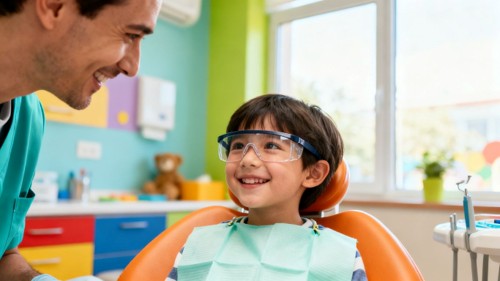
Laser dentistry has become a more familiar option in children's dental care, but many parents still aren't sure what it actually involves or when it makes sense for their child. Pediatric laser dentistry uses focused light energy during certain procedures instead of traditional drills or cutting instruments. At Brookhurst Pediatric Dentistry and Orthodontics in Huntington Beach, Dr. Beanca Chu and her team use the Solea Dental Laser to make selected treatments quieter, gentler, and more comfortable for kids.
What Is Pediatric Laser Dentistry?
Pediatric laser dentistry uses focused light energy during certain dental procedures, working on either tooth structure or soft tissue depending on the treatment, while the dentist controls its intensity and movement throughout. It isn't a separate category of care so much as another instrument a trained pediatric dentist may choose for the right child and situation — never an automatic choice for every problem. The dentist examines your child first and explains why a laser is or isn't being considered.
Common Procedures That Use Laser Technology
Laser technology can be useful for selected procedures involving cavities, gum tissue, or oral soft tissue. There are two broad types: hard tissue lasers, used for things like cavity detection, fillings, and tooth sensitivity treatment, and soft tissue lasers, used for gum reshaping, minor soft-tissue surgery, or muscle attachment procedures such as a restrictive lip or tongue frenulum. The right method depends on your child's anatomy, age, symptoms, and treatment plan, and the visit may still include an exam, imaging, or conventional instruments alongside the laser.
The Solea Dental Laser at Brookhurst Pediatric Dentistry
At Brookhurst Pediatric Dentistry and Orthodontics, our team uses the Solea Dental Laser for select procedures involving teeth and soft tissue. What many parents notice right away is what's missing: there's no loud drilling sound and no vibration. For children who are sensitive to noise or already anxious about dental visits, that difference can matter quite a bit. The FDA has cleared the Solea Dental Laser, and it's widely used in pediatric dentistry, though our team always explains why it may or may not be the appropriate choice for a given treatment.
Benefits of Laser Dentistry for Kids
The possible benefits of laser dentistry for kids often relate to comfort, precision, and the way tissue responds after treatment. Some children feel less vibration than they would with a traditional dental instrument, while others simply appreciate a shorter or quieter procedure. A child's age, anxiety level, dental history, and the location of treatment all affect the experience, and the dentist may still recommend local anesthetic, protective eyewear, or other routine safety measures alongside laser use. Families who work with our pediatric dentistry team often appreciate a few practical advantages:
- Quieter treatment without the sound of a traditional drill
- A gentle approach that may reduce the need for numbing in some cases
- Shorter appointment times for certain procedures
- Less disruption to healthy tooth structure
- A more positive overall experience for anxious children
Comfort can improve a child's cooperation, but it should never be treated as a guarantee. Recovery is influenced by the specific procedure, your child's health, and how carefully aftercare instructions are followed.
Is Laser Dentistry Safe for Children?
Parents commonly ask whether laser dentistry is safe for children. In general, dental lasers can be used with children when the equipment is appropriate, the operator is trained, and standard protective measures are followed. Safety depends on the specific laser, procedure, settings, and clinical judgment — not simply on the word "laser." Your child should receive protective eyewear when required, and the team should review relevant medical history, medications, allergies, and previous dental experiences before starting. If a child is unable to remain still or is especially distressed, the team may recommend a different approach instead.
What to Expect During a Laser Dental Visit
A laser dental visit usually begins with an assessment and a conversation about the planned procedure. Our team may show your child the room, explain the protective eyewear, and describe sounds or sensations in simple, age-appropriate language. Depending on the treatment, the appointment may involve numbing, suction, routine dental instruments, or a short period of observation afterward. Children often do better when they know what will happen without being given frightening details — calm, straightforward words tend to help more than over-reassurance.
| Question to Ask | Why It Matters |
|---|---|
| What is being treated? | Laser use differs by tissue type and procedure |
| Why use a laser here? | The device should serve a specific clinical purpose |
| What are the alternatives? | Families need a meaningful choice to weigh |
| What happens afterward? | Aftercare affects comfort and healing |
This table is a starting point, not a substitute for an examination. Your pediatric dentist can explain how the answers apply specifically to your child.
How to Prepare Your Child
Preparation should match your child's age and temperament. Tell them where they're going, who will be there, and that the dentist will explain each step. If our office has given fasting, medication, or arrival instructions, follow those exactly. Bring a comfort item if allowed, offer a light, familiar meal unless told otherwise, arrive with time to settle in, and share relevant medical and dental history with the team beforehand. Afterward, let our staff guide food, brushing, pain-relief, and activity decisions — mild tenderness may be expected for some procedures, but increasing pain, persistent bleeding, fever, or unusual swelling deserves a call to our office rather than waiting it out. Families new to the practice can review our office visit information ahead of time to know what to expect.
Talking to Your Pediatric Dentist About Laser Options
A laser may be worth discussing when your child needs a procedure for which the dentist has appropriate training and experience. Start by asking what diagnosis is being treated and whether the laser changes the expected comfort, duration, or recovery — those details matter more than general claims that laser dentistry is always faster or painless. It's also reasonable to ask about the dentist's experience with the treatment and what happens if your child becomes uncomfortable or can't stay still. According to the American Academy of Pediatric Dentistry, lasers are recognized as an alternative and complementary method for soft and hard tissue procedures in children, provided the dental professional has received appropriate training and follows wavelength-specific safety precautions.
Conclusion
Pediatric laser dentistry can be a useful option for selected procedures, but its value depends on the diagnosis, the clinician's training, and your child's individual needs. Ask about expected sensations, alternatives, safety precautions, and aftercare before agreeing to treatment. You can contact our Huntington Beach office to talk with our team about whether the Solea Dental Laser is a good fit for your child's next visit.
Frequently Asked Questions
What is pediatric laser dentistry?
Pediatric laser dentistry uses focused light energy for selected dental procedures involving hard or soft tissue. A dentist chooses it based on the child's diagnosis and treatment needs.
Is laser dentistry safe for children?
It can be safe when used by a trained dental professional with suitable equipment and protective measures. Safety also depends on the procedure, laser settings, and the child's medical history.
Does laser dental treatment hurt?
Some children experience less vibration or discomfort with certain laser procedures, but sensations vary. Local anesthetic may still be recommended, and no treatment should be described as guaranteed to be painless.
Will my child need anesthesia for a laser procedure?
Some procedures may need local anesthetic, while others may not. The answer depends on the treatment area, your child's sensitivity, and how much tissue is involved.
Can lasers treat cavities in children?
Lasers may be used for certain treatments involving tooth structure, but they aren't appropriate for every cavity. The dentist must examine the tooth and discuss suitable alternatives.
What should I ask before choosing laser treatment?
Ask what is being treated, why a laser is recommended, what alternatives exist, what anesthesia may be needed, and how to care for your child afterward.
About the Author
Brookhurst Pediatric Dentistry and Orthodontics is located at 19201 Brookhurst St #101, Huntington Beach, CA 92646. The practice is led by Dr. Beanca Chu, DDS, a board-certified pediatric dentist who earned her dental degree from Case Western Reserve University and completed her postgraduate pediatric dentistry training at USC, along with a residency at Children's Hospital Los Angeles, Miller Children's & Women's Hospital, and Rancho Los Amigos National Rehabilitation Center. Dr. Chu is a member of the American Board of Pediatric Dentistry, the American Academy of Pediatric Dentistry, and the California Society of Pediatric Dentistry. Dr. Shawn Yu, an orthodontist and USC orthodontic program graduate, also treats patients at the practice.
Medical Disclaimer
The information provided in this article is for educational purposes only and does not constitute professional medical or dental advice, diagnosis, or treatment. Whether laser dentistry is appropriate for your child can only be determined through an in-person dental evaluation. Always seek the advice of your dentist or other qualified health provider with any questions regarding your child's dental care. Never disregard professional advice or delay in seeking it because of something you have read here.
Blog Post Author

Contributed by DentalROI
DentalROI provides relevant dental content to help providers educate patients. The statements, services, and products referenced in this article have not been evaluated by the Food and Drug Administration, and they are not intended as a substitute for professional medical advice, diagnosis, or treatment. Always seek the advice of your dental provider with any questions or issues you may have. Specific recommendations may vary in different circumstances, so individual consultation is important.