Dental Blog

Our dental practice is dedicated to educating you with the latest tips and tricks to maintain your optimal oral health.

What is the Difference Between a Dentist and an Orthodontist

blog

It's pretty common for people to wonder about the difference between a dentist and an orthodontist. Both work with your teeth and aim for a healthy smile, but they have different training and focus areas. Understanding what each professional does can help you know who to see for your specific needs. Let's break down what makes a dentist different from an orthodontist.


Read More

How Often Do You Go to the Orthodontist After Braces

blog

So, you've finally got those braces off and are enjoying your new smile. That's fantastic! But wait, does that mean you're completely done with the orthodontist? Not quite. There are still a few important steps to take to make sure your teeth stay just the way they are. Let's talk about what happens after braces and why those follow-up visits matter.


Read More

Why Floss Gets Stuck and What You Can Do About It

Flossing

It happens to the best of us. You start your nightly flossing routine, feeling good about taking care of your teeth, and then suddenly, the floss gets stuck. It’s frustrating, right? You might wonder why you can't get floss between your teeth, especially if it seems to happen more often lately. Whether it's tight spaces, a recent dental filling, or just a tricky spot on your back teeth, there are reasons why floss can get stuck and ways to handle it.


Read More

Common Pediatric Dental Problems: What Parents Should Know

dental

Keeping a child's smile healthy is a big job for parents. Many common pediatric dental problems can pop up as kids grow. These issues, ranging from cavities to bite problems, can sometimes be a surprise. Understanding what to look out for and how to prevent them is key to helping your child have good oral health throughout their childhood and beyond. Let's explore some of the most frequent dental problems in pediatrics and what parents can do.


Read More

A Quiet Revolution in Pediatric Dental Care

Pediatric

Children don’t always have the words to explain fear. But they show it—in a clenched jaw, a turned head, legs that won’t stay still. In pediatric dentistry, these quiet cues matter. They’re not obstacles. They’re information. And sometimes, they point to the need for sedation—not to control a child, but to meet them where they are.

Sedation dentistry offers a way forward when traditional approaches fall short. Whether a child is facing a long procedure, has had a difficult past experience, or lives with a condition that makes dental care more complex, sedation becomes a tool to protect not only the body, but the experience itself.


Read More

What Are White Spots, and Why They Matter

Often, patients or caregivers notice pale patches—“white spots”—on front teeth. These aren’t just cosmetic quirks: they frequently reveal early enamel demineralization, where hostile acids dissolve mineral constituents (like calcium and phosphate) from enamel’s crystalline lattice.

In other instances, white or brown opacities stem from developmental enamel disturbances (for example, fluorosis or enamel hypomineralization). Though sometimes stable, these areas may be more vulnerable to decay over time. Addressing them early helps preserve tooth health and appearance.


Read More

Invisalign Teen: Rethinking Braces for a New Generation

Invisalign

Teenagers go through a lot of changes, both emotionally and physically, but dental development is also very important during this time. During these years, crooked teeth, overcrowding, and bite problems often show up. If they are not fixed, they can quietly affect everything from oral hygiene to how well the jaw works in the long term.

Metal braces have been the standard answer for a long time. But these days, more and more orthodontists are choosing Invisalign Teen, which is a lot less noticeable and surprisingly high-tech. The clear trays may look simple, but the technology that makes them work is not. And for the right teen, this approach can deliver impressive results with comfort and discretion.


Read More

When Dental Emergencies Involve Children: What Every Parent Should Know

Kids are used to falling, bumping, and bruising, but when those accidents happen in the mouth, it can feel like an emergency and be very upsetting. Dental emergencies in kids can be anything from minor soft-tissue injuries to serious tooth avulsions. In either case, the person responding needs to stay calm and know what to do. Yet many parents are unsure how to react in those critical first moments. Is it safe to touch the tooth? Should a baby tooth ever be replanted? Does a chipped tooth need immediate treatment, or can it wait?

In pediatric dentistry, timing and approach matter profoundly. Acting quickly—but appropriately—can mean the difference between saving a permanent tooth and facing long-term restorative treatment. And as emphasized in clinical guidance provided by Bye Bye Sugar Bugs, a well-prepared parent is often the child’s best advocate in an emergency.


Read More

Sedation Dentistry: A Gentle Path Forward in Pediatric Care

Dental visits, for most children, follow a predictable rhythm—cleanings, checkups, perhaps a sealant or two. But not every kid fits this mold easily. Some children become scared because of unfamiliar sounds, hands so close, or the thought of being uncomfortable.

For children with developmental disabilities, anxiety disorders, or medical histories that make cooperation challenging, even the simplest task can seem impossible. Sedation dentistry is not a quick fix; it is a carefully planned approach that addresses both the child's emotional needs and the clinical requirements of treatment.


Read More

How to Make Your Child's Trip to the Dentist Fun

Pediatric-Dentist

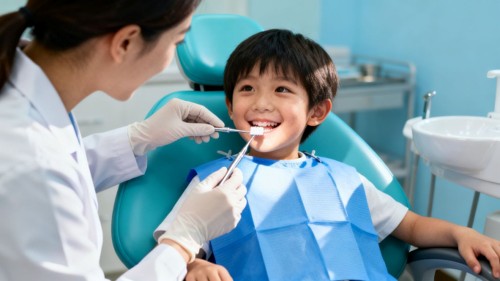
It could feel like a big thing for both you and your child to go to the dentist for the first time. Some kids might run inside the clinic without thinking twice, while others might grasp your hand closely and look scared. How you treat your child on their first visit to the dentist can affect how they feel about going to the dentist for years to come.

This visit should be more than just a routine check-up; it should be the start of a lifelong connection with your oral health. If you prepare your child well, use positive language, and make the visit fun, you can help them feel good about going to the dentist.


Read More