
PREVENTIVE CARE

Preventive dental care is important throughout life, especially at a young age. By practicing good oral hygiene at home and scheduling regular checkups with the dentist, your child can help keep her smile bright and healthy for many years to come.
Here are a few simple ways to prevent the build-up of plaque and cavities:

  • Make sure your child brushes her teeth at least twice a day with a soft-bristled toothbrush. Use fluoride toothpaste to remove food particles and plaque from the tooth surfaces. Also be sure she brushes the top surface of her tongue; this will remove any extra plaque-causing food particles and help keep her breath fresh!
  • Make sure your child cleans between her teeth by flossing at least once a day. You can also use a mouthwash to help kill bacteria and freshen her breath. Decay-causing bacteria can linger between teeth where toothbrush bristles can't reach. Floss and mouthwash will help remove plaque and food particles from between the teeth and under the gum line.
  • Make sure your child eats a balanced diet, and try to avoid extra-sugary treats. Nutritious foods such as raw vegetables, plain yogurt, cheese, or fruit can help keep your child's smile healthy.
  • Remember to schedule regular checkups with your child’s dentist every six months for a professional teeth cleaning.
  • Ask your dentist about dental sealants, a protective plastic coating that can be applied to the chewing surfaces of the back teeth where decay often starts.
  • If your child plays sports, be sure to ask your dentist about special mouthguards designed to protect your child’s smile.
Download Printable instructions

Brushing Instructions

brushing diagram

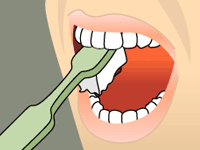
Brushing: Step 1

Place your toothbrush at a 45-degree angle to your gum.
brushing diagram

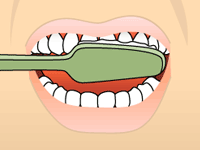
Brushing: Step 2

Brush gently in a circular motion.

brushing diagram

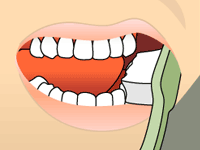
Brushing: Step 3

Brush the outer, inner, and chewing surfaces of each tooth.
brushing diagram

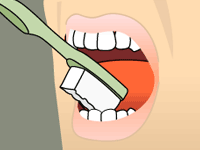
Brushing: Step 4

Use the tip of your brush for the inner surface of your front teeth.
Flossing Instructions

flossing diagram

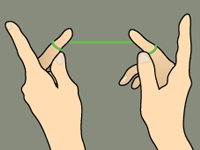
Flossing: Step 1

Wind about 18 inches of floss around your fingers as shown. Most of it should be wrapped around one finger, and the other finger takes it up as the floss is used.
flossing diagram

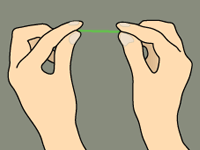
Flossing: Step 2

Use your thumbs and forefingers to guide about one inch of floss between your teeth.
flossing diagram

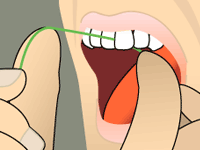
Flossing: Step 3

Holding the floss tightly, gently saw it between your teeth. Then curve the floss into a C-shape against one tooth and gently slide it beneath your gums.
flossing diagram

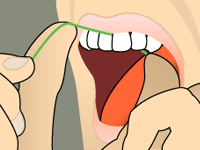
Flossing: Step 4

Slide the floss up and down, repeating for each tooth.

If it’s been six months or more since your child’s last dental checkup, then it’s time to contact our practice and schedule an appointment!


Schedule a Consultation

Preventive care is the foundation of everything at Brookhurst Pediatric Dentistry and Orthodontics, because keeping healthy teeth healthy is always easier — and less costly — than treating problems after they develop. Our pediatric dentists in Huntington Beach provide preventive dental care for children: such as routine cleanings, comprehensive exams, digital X-rays, fluoride treatments, dental sealants, oral hygiene instruction, and building good habits that affect your child's teeth. For infants and toddlers, early visits also include monitoring of tooth eruption, jaw development, and habits like thumb-sucking or pacifier use. For older children and teens, we track bite alignment and evaluate any need for orthodontic treatments. Every preventive visit is an opportunity to catch small issues before they become bigger problems and to give your child the tools and knowledge to take great care of their smile at home.
We recommend every young patient of ours to have a routine dental cleaning every six months. Dental cleanings every six months remove plaque and tartar buildup that regular brushing and flossing cannot get rid off on their own, reducing the risk of cavities and gum problems between visits. That said, some children may need more frequent cleanings. For example, children with a higher cavity risk, active orthodontic treatment, a history of gum issues, or difficulty maintaining good oral hygiene at home may need dental cleaning more often. Our team will evaluate your children's teeth at each visit and recommend a cleaning schedule that suits their need. We strongly believe in consistency with cleanings. It is one of the most powerful things you can do to protect your children's oral health.
Dental sealants for children are thin, protective coatings applied to the chewing surfaces of the back teeth — typically the molars — to shield them from the bacteria and food particles that cause cavities. The grooves and pits on the tops of molars are deep enough that toothbrush bristles often cannot reach them effectively, making those surfaces especially vulnerable to decay. Sealants act as a physical barrier, dramatically reducing the risk of cavities in those hard-to-clean spots. At Brookhurst Pediatric Dentistry and Orthodontics, sealants are one of the most recommended preventive treatments for school-age children, usually applied once the first and second permanent molars come in — typically around ages 6 and 12. The procedure is quick, completely painless, and requires no drilling. Studies consistently show that dental sealants reduce the risk of cavities in children's back teeth by up to 80 percent, making them one of the best investments in your child's long-term oral health.
Current guidelines from the American Academy of Pediatric Dentistry recommend introducing fluoride toothpaste for children as soon as the very first tooth appears — even in infants. For children under age 3, a smear of fluoride toothpaste about the size of a grain of rice is all that is needed. For children ages 3 to 6, a pea-sized amount is appropriate. Many parents wait too long to start fluoride toothpaste out of concern about safety, but using the right amount by age is both safe and highly effective at preventing early childhood cavities. Fluoride strengthens developing enamel and helps teeth resist the acid attacks caused by bacteria and sugar. At Brookhurst Pediatric Dentistry and Orthodontics, we guide families through exactly how and when to use fluoride at home during every early childhood visit, so you never have to guess. If you have questions about the best toothpaste for your toddler's teeth in Huntington Beach, our team is happy to make a personalized recommendation at your next appointment.
Preventing cavities in baby teeth starts with understanding that primary teeth are just as important as permanent ones — they help your child chew, speak, and hold space for the adult teeth developing beneath the gumline. Some best dental habits include brushing twice daily with a rice-sized amount of fluoride toothpaste, avoiding prolonged bottle or sippy cup use with milk or juice (especially at bedtime), limiting sugary snacks and drinks, and starting dental visits by your child's first birthday. We also offer fluoride treatments and dental sealants. This can help add another layer of protection, especially for children who are at higher cavity risk. At Brookhurst Pediatric Dentistry and Orthodontics, every preventive visit includes a personalized cavity risk assessment and recommendations tailored to your child's age and diet. Cavities in baby teeth are the most common chronic childhood disease in the United States — but they are largely preventable with the right habits and consistent professional care starting early in Huntington Beach.
Fluoride treatments for toddlers and young children are not only safe — they are one of the most evidence-backed preventive tools available in pediatric dentistry. At Brookhurst Pediatric Dentistry and Orthodontics, professional fluoride applications are recommended for children at every routine visit. At our office, we apply fluoride treatment in a controlled amount directly to the teeth. This helps to strengthen enamel and to make teeth less likely to decay. Parents sometimes are concerned about fluoride safety, and it is understandable. When used in the appropriate doses under the guidance of a pediatric dentist in Huntington Beach, fluoride treatment is safe and effective. The risk of untreated cavities in young children — including pain, infection, difficulty eating, and impacts on speech development — far outweighs any risk from professionally applied fluoride. Our team is always happy to walk you through exactly what is used and why at your child's next visit.